Falsetto
Ludovica Carbotta
September 14 – November 30, 2017
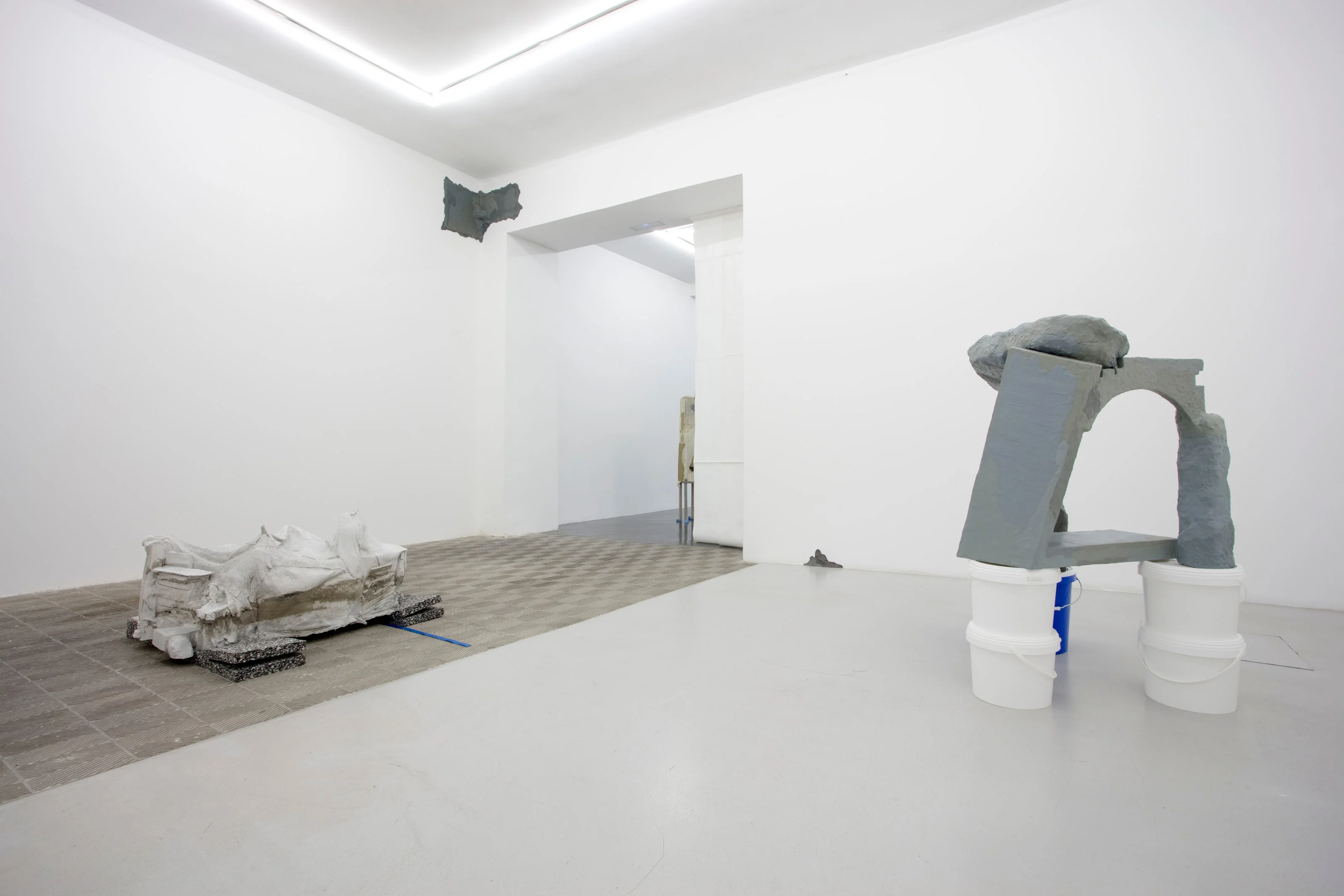
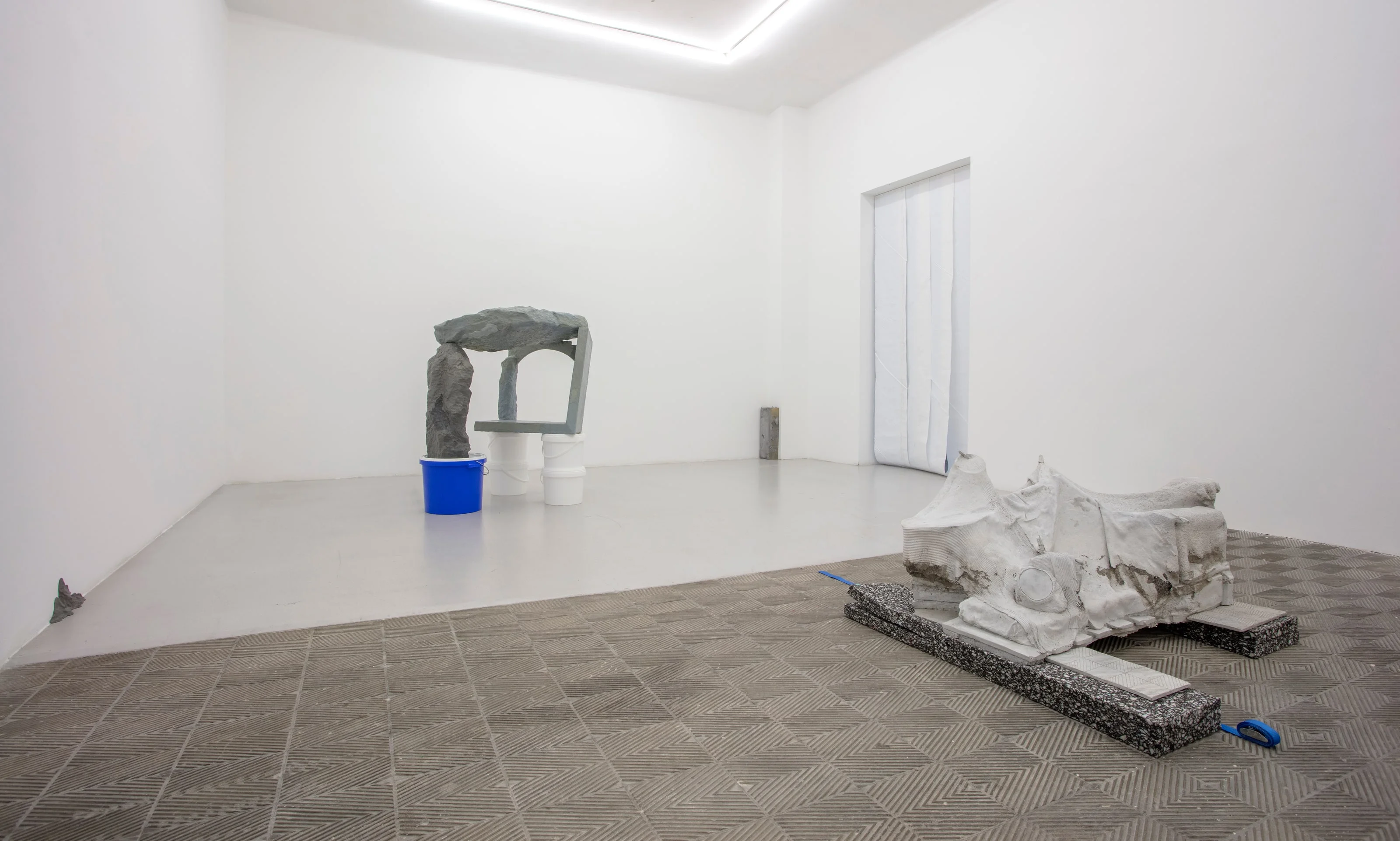
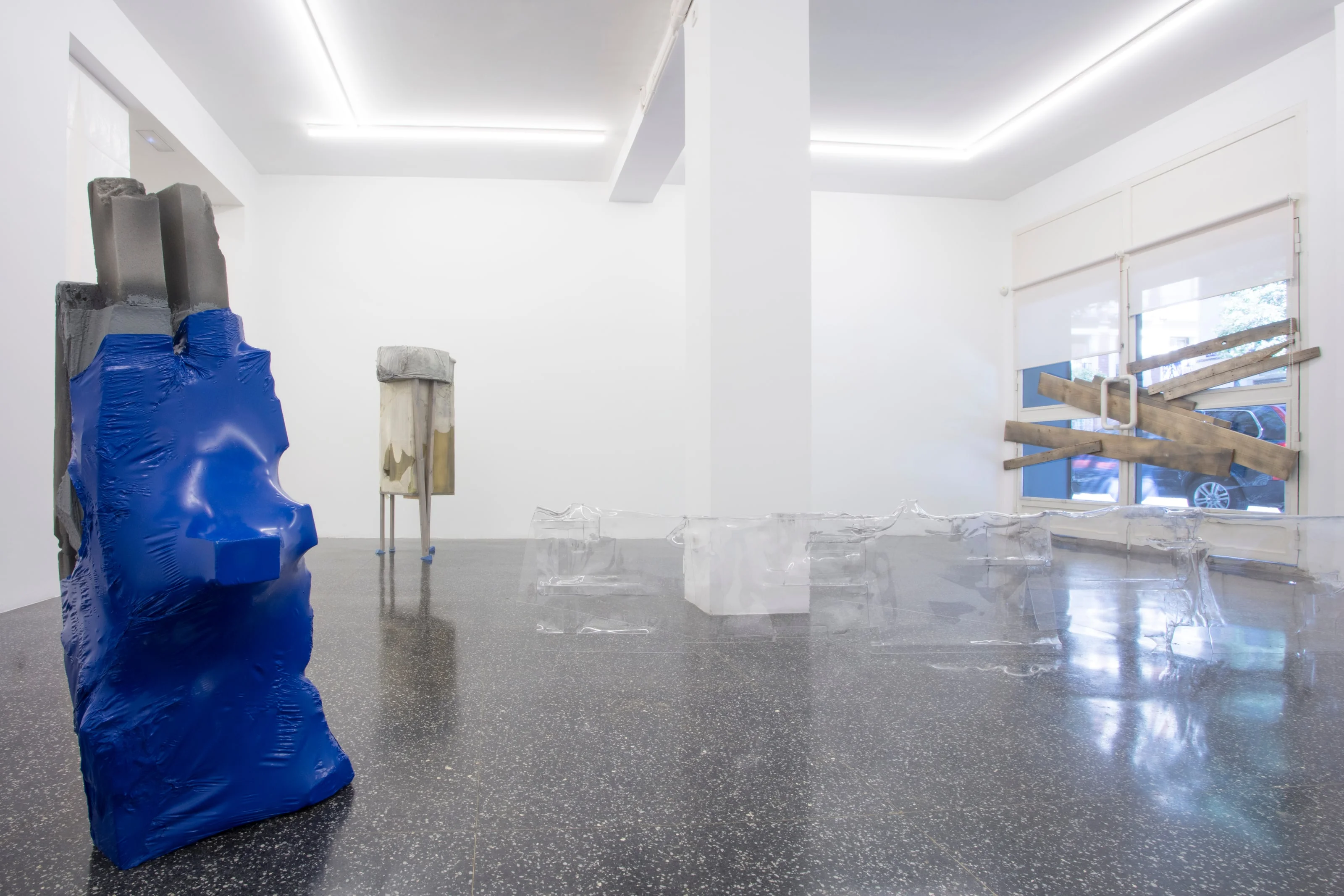
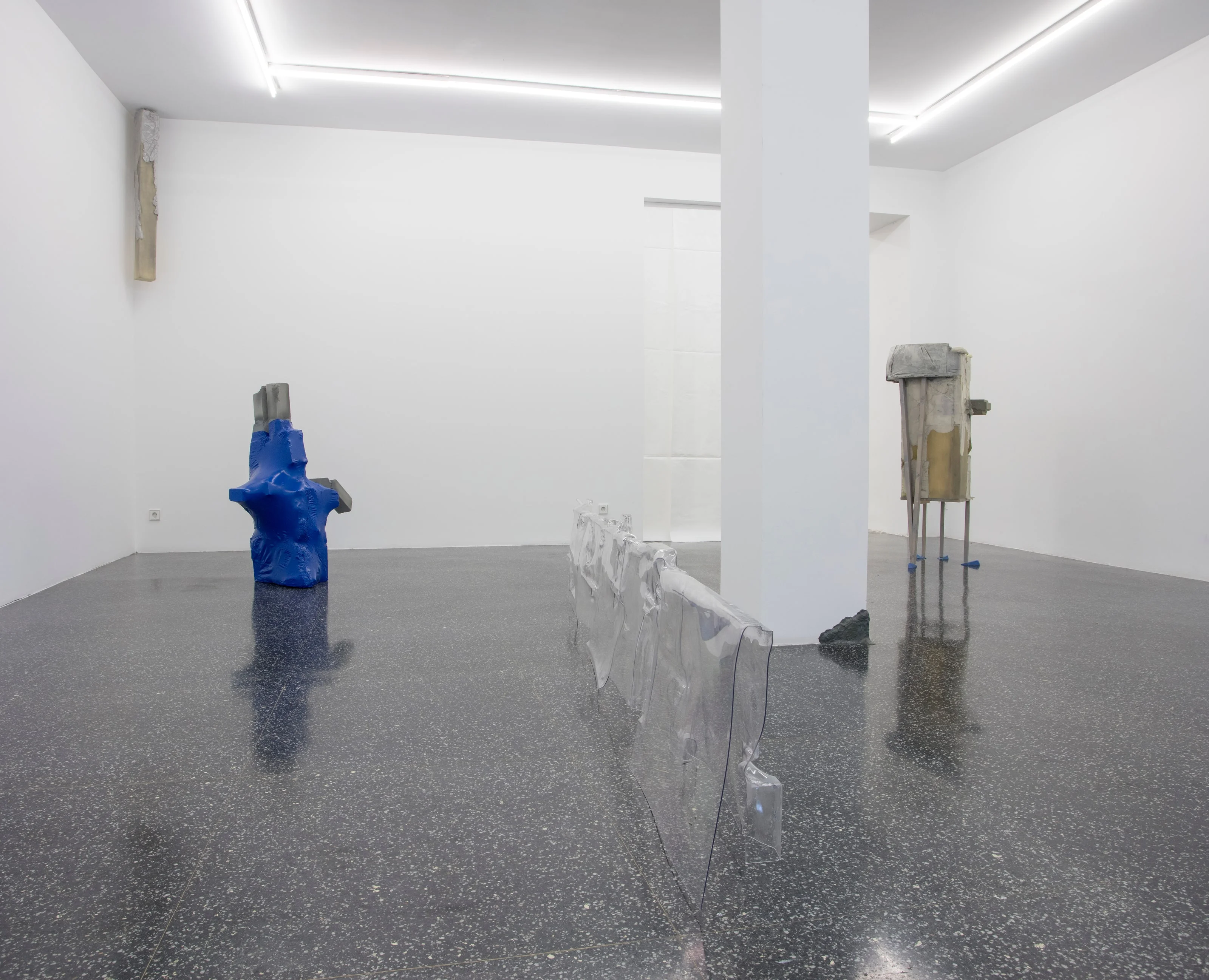
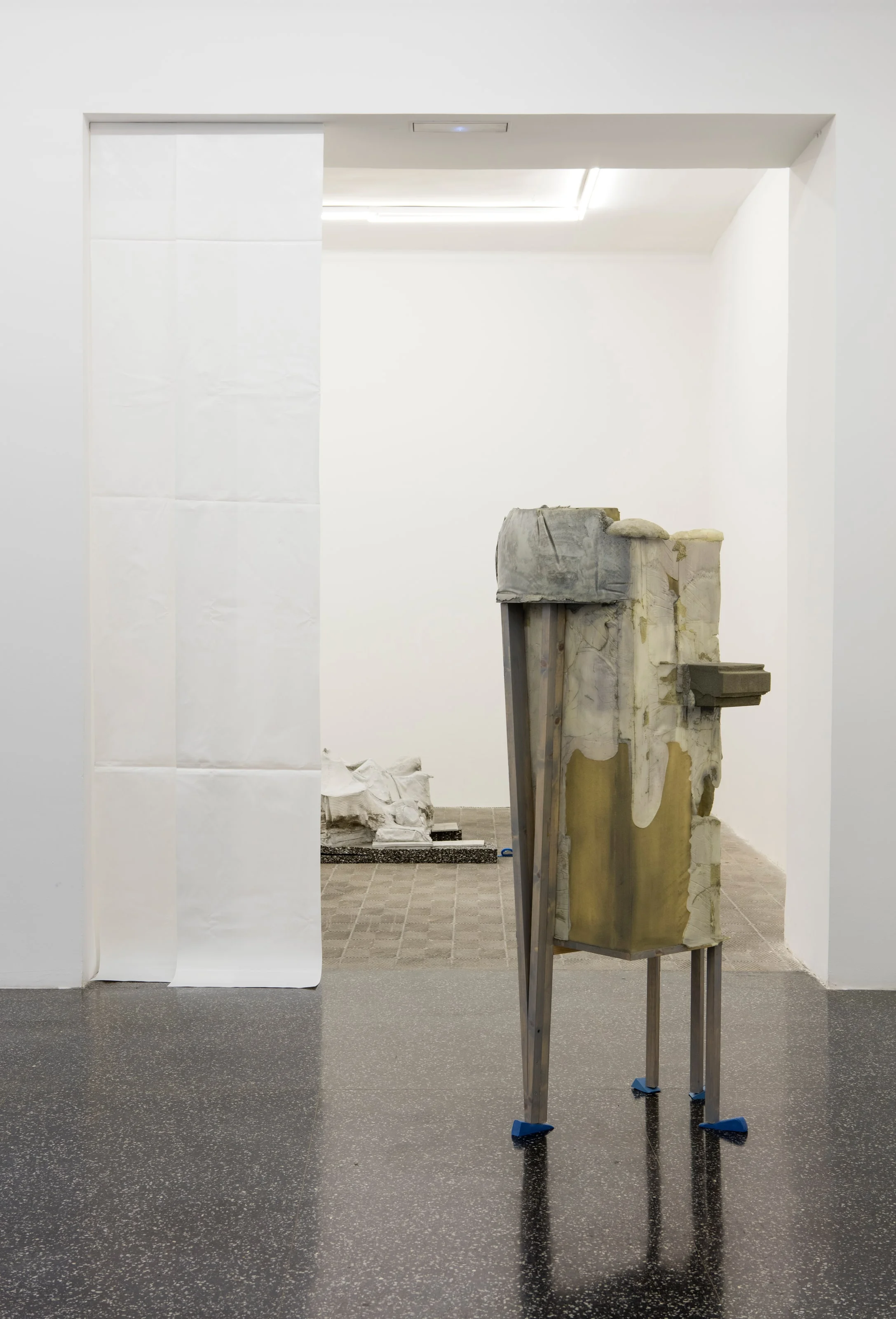
In Falsetto, Ludovica Carbotta’s first solo show in Galería Marta Cervera, the exhibition space transforms into a heterotopic laboratory. The nomenclature of the works itself (tnt-001, twr-001, brdg-001, rch-001) refers us of serial test samples. We are presented five prototypes of recognizable structures: a cabin, a tower, a bridge, a wall and an arch, each built in a different material such as wood, cement, silicon rubber, sponge or foam. The shape, the structures’ aesthetic and the neutral colors bring to mind post-apocalyptic urban landscapes, which can be associated with the notion of disaster/deconstruction and the creative opportunities that arise out of such scenarios. The existing potential when it comes to creating new environments, the manifold ways of reinventing architectures and the crucial role of the imagination in that process of creation are all issues that are being explored and experimented with in this laboratory, where something we can think of as “final architectures” have been produced.
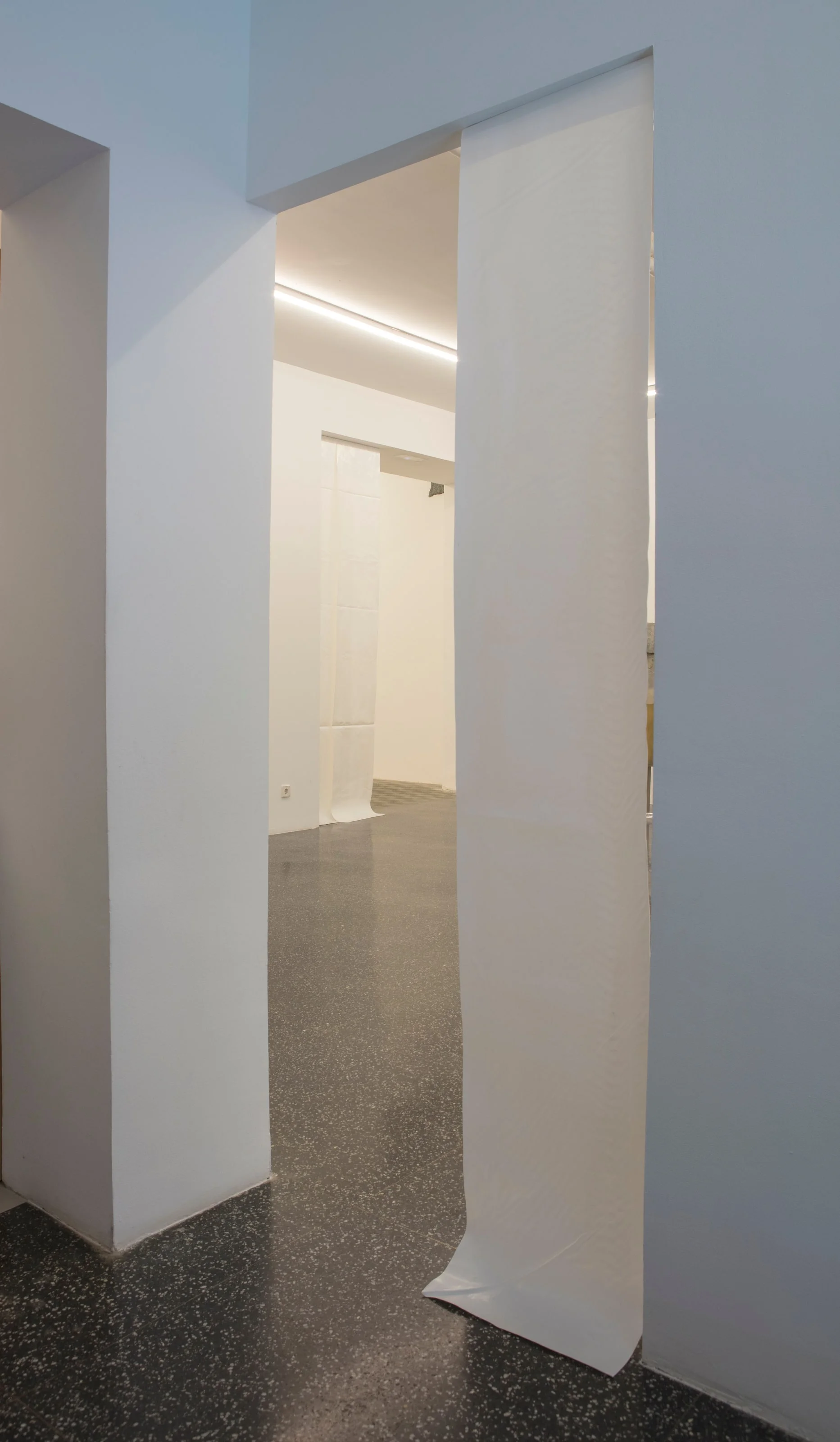
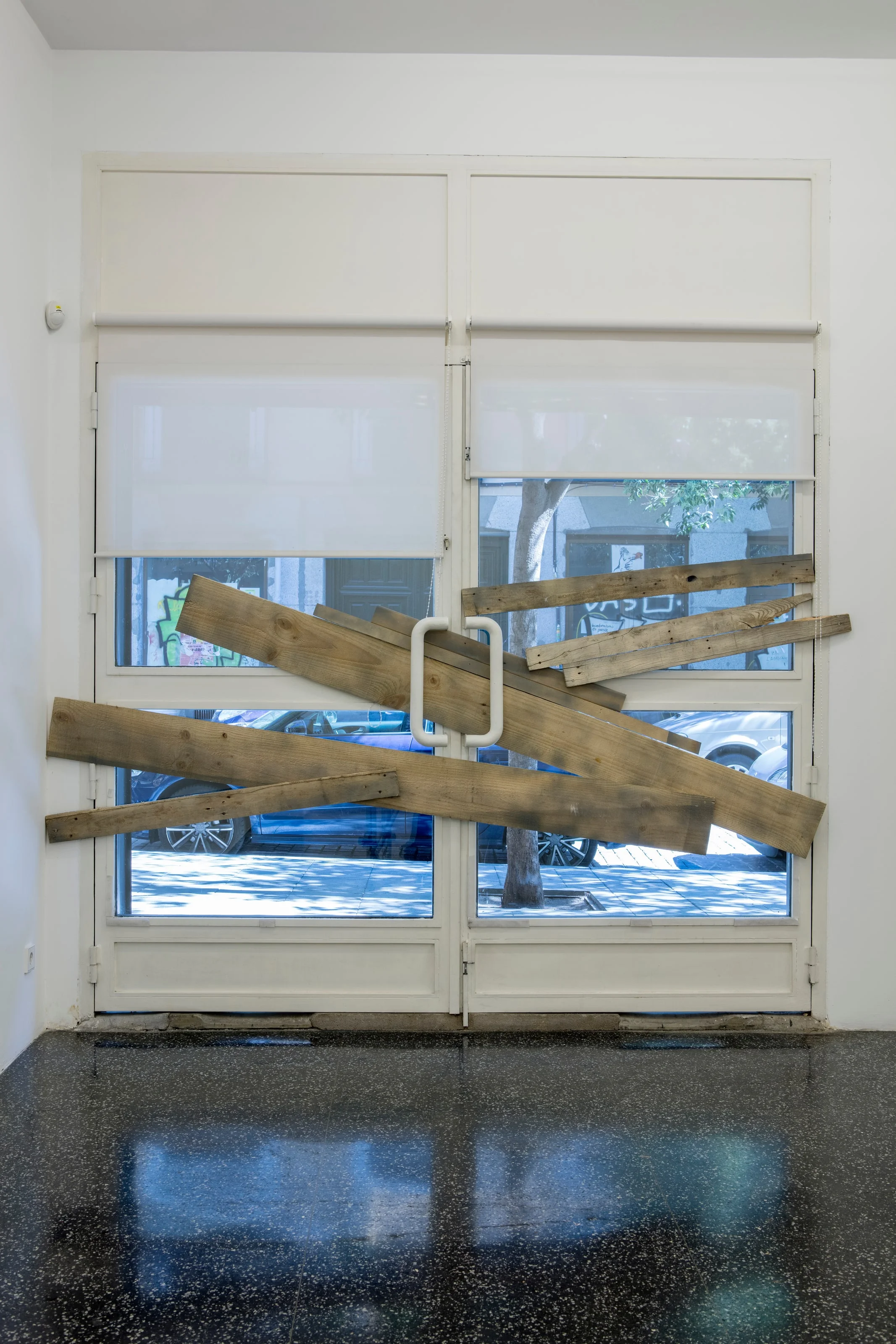
Falsetto is a term for a singing method that singers – tenors in particular – employ to reach high notes. In general, the technique consists on singing notes so far off the singer’s usual range that they sound artificial. Carbotta encountered the word falsetto in her research on bunkers and other insulation structures built during the Cold War. During this time, the United Kingdom developed a broadcasting system for times of war called WTBS (Wartime Broadcasting System), through which prerecorded messages would be broadcasted via radio in case of a nuclear attack. One of the passwords that the British government chose to authorize the broadcast of a national warning was falsetto. The messages were, after all, fake, since they were not being broadcasted live, but they tried to emulate a broadcast in real time in order to transmit an increased feeling of tranquility to the people. This laboratory is a fictitious environment and, to a certain extent, it is also fake, so far as the architectural models are representations of a reality to which we don’t have access. When we walk around the exhibition space, it is difficult to distinguish which elements belong to the gallery’s structure and which ones to the installation; both spaces have affected each other, and it’s hard to know where each belongs. The architectural models and the gallery’s architecture have blended, shaping a new environment, a laboratory that generates creative force through adaptation. For instance, in the work tnt-001 we can find clear references to the decoration of the gallery floor’s hydraulic tiles. On the other hand, Falsetto also activates a state of emergency here – one conceived for scenarios of isolation, in which the architecture transmits messages to try to communicate with people.
Falsetto, the fictitious laboratory that Ludovica Carbotta has fabricated, integrates a new fictitious context in a real space; a place from which to operate with the imagination to build meaning. Time stays in the margins, as the exhibition prioritizes the exploration of spaces and environments. Unstable and unpredictable, these environments conform a ground from which to delve into the potential of the chance encounter, or the power of the unforeseen.
Gema Melgar