Sam Falls
September 13 – November 3, 2012
My work is engaged with expanding the dialogue of photography with the other arts, namely painting and sculpture. In doing so the goal has been to drop the specific material and technical qualities of photography which tend to isolate the viewer and favor the more theoretical elements essential to the medium, namely representation and time. By using alternative materials more directly associated with the traditional art forms of painting and sculpture while employing photographic processes, I hope I’ve been able to bridge the gap between photography, painting, and sculpture in a progressive dialogue that synthesises the mediums in a harmonious way rather than arguing photography’s validity as a separate but equal art.
Here I’ll be exhibiting three different kinds of works all sharing the same subject matter. The decision to use building blocks relies on my interest in the developmental language of contemporary art, namely minimalism and modernism. These historic works were shaped by abstraction and geometry, so for each project my goal is to choose subject matter that is at once relative to past movements in its aesthetic quality, while also serving well now as an inalienable example of representation and commonality.
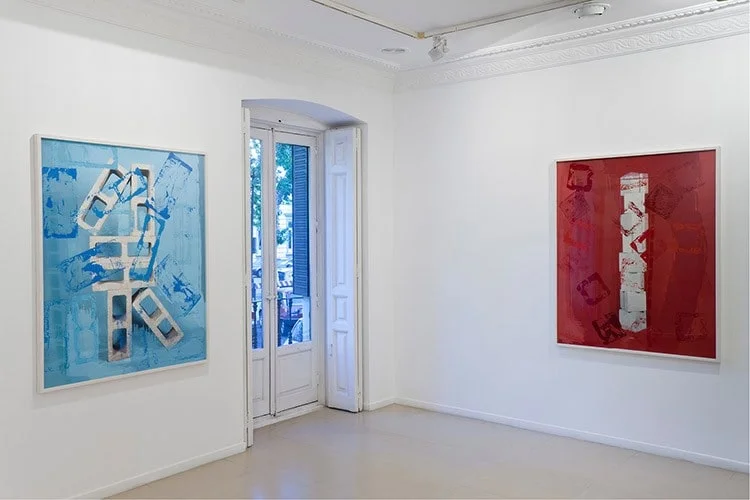
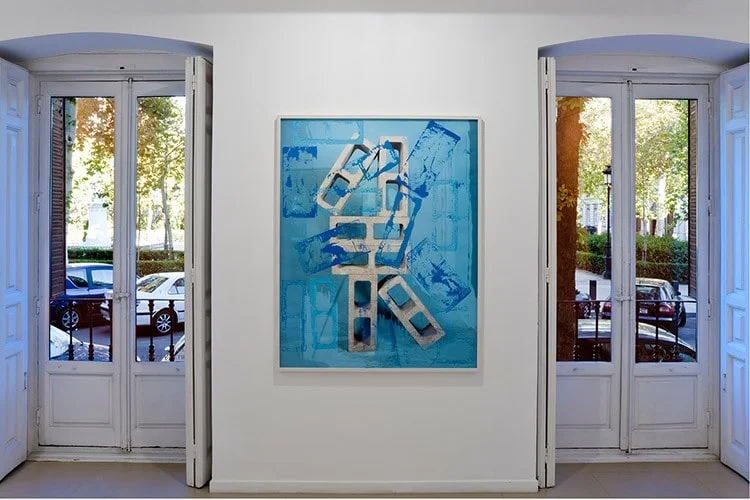
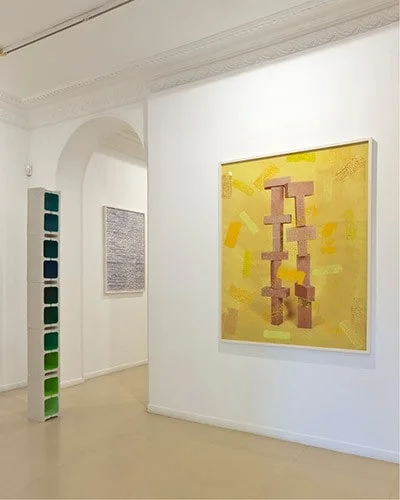
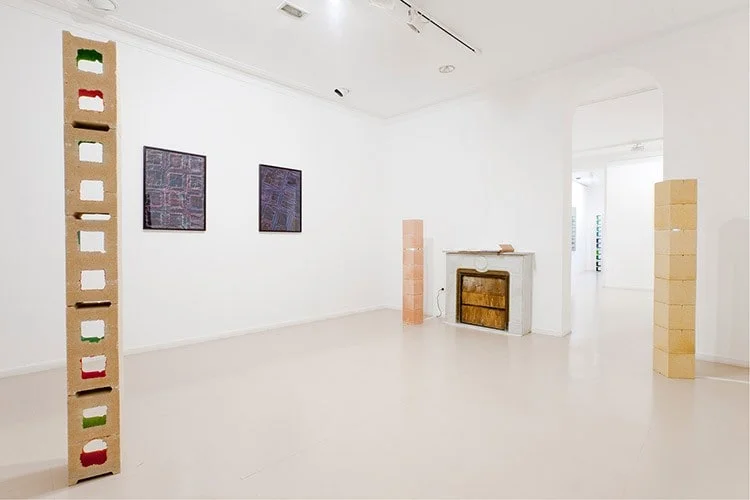
The first element of the show are photographic prints on paper which are then painted on using the actual subjects in the image. I photographed basic building blocks (cinder blocks, bricks, clay blocks, etc.) against different colored backdrops on a 4x5 film camera and then scanned the film into the computer. In photoshop I used the paintbrush tool to select colors from the backdrop and apply digital brushstrokes with a color that is derived digitally from one of the millions of pixels composing the solid color of the photographed backdrop. I select a different pixel at random several times to get a composition of varied colors from the otherwise uniform backdrop and digitally paint on the picture to exemplify inherent colors otherwise hidden by the homogeneity of the whole. The image is printed and in the studio I take the same blocks that were in the photograph and apply acrylic paint with a pumice medium (to match the texture of the blocks) to the surface of the blocks and then use the block as a traditional printing tool on the photograph. I use various sides of the blocks and various colors matching those which have been selected from the imaged and painted ondigitally, so technically there is the original real life color, then inherent colors made apparent in the computer, and then finally a physical manifestation of these colors on the print itself. In a way you end up with an even more real, or hyper-real understanding of the colors in the image.
Furthermore, the final object holds two very different but equally valid representations of the subject (the relative blocks). One is the heralded photograph which we believe these days to be the most accurate represenation of reality, pitted against the life-size paint rendering from the block itself which mimics not only the shape of the object but the physical quality. To get to the image of the subject you first have to look through the surface of it as its been applied by the surface of the subject itself. This breaks down the photograph in a couple ways – first you loose the problem of alienation for the viewer, that is the fact that normally we see a photograph and believe it is something ‘that has been’ in the past which we can only access through the image, but there is only the creator or artist who witnessed its reality at one instant. Here the photographic object has seen several periods of production, the studio set-up, the photograph on film, the computer composition, and the physical painting. So now the viewer fits into a timeline of production where they have a much more familiar relationship to the object and the artist over time, where obviously also their viewing has been considered. I think of this as a much more inviting and friendly way to see a photograph – as one would see a painting – with the hand of the artist revealed not only in composition but material quality – which is usually absent in photography.
So it addresses the problem of time, and the problem of representation is addressed by the block print – which quite literally references the printing process which proceeded photography as representation for the masses, but I think it also questions after coming all this way, is it really that much better?
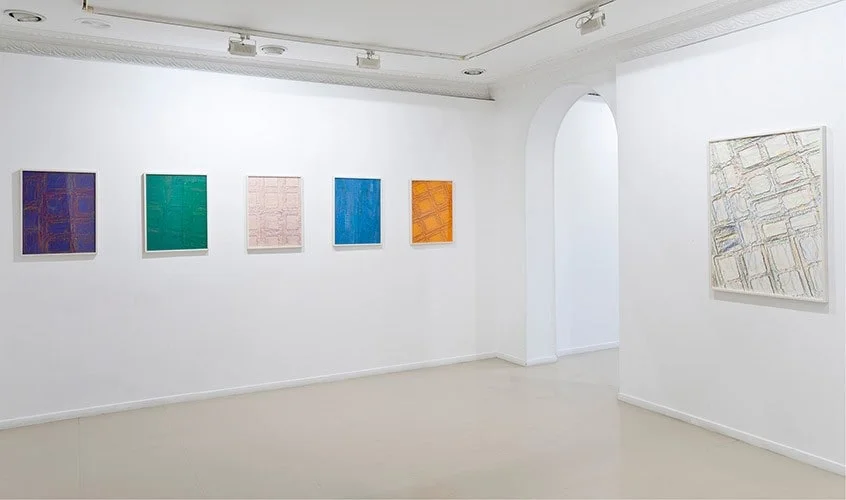
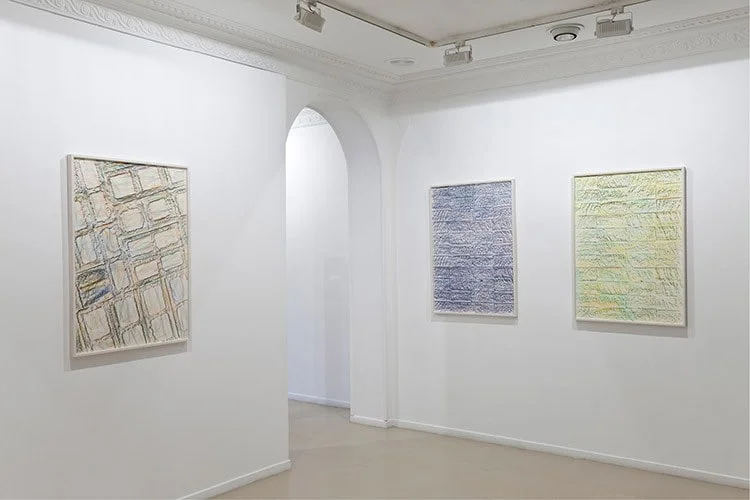
The second body of work for the show consists of rubbings using many colored pencils to transfer the image of the blocks to paper. The transfer mimics and merges many aspects of the painted photographic prints in the sense that both the actual printing process and actual size of the blocks is combined into one representation. It is elementarily simple, however it gets to the heart of imaging an object while requiring development through a prolonged process. The intimacy of the piece becomes apparent as the colors mix and ultimately the works acquire not only the image of the subject, but the image of time and the artist’s hand.
It is elementarily simple, however it gets to the heart of imaging an object while requiring development through a prolonged process. The intimacy of the piece becomes apparent as the colors mix and ultimately the works acquire not only the image of the subject, but the image of time and the artist’s hand.
The last works are sculptures made from the blocks themselves. The color added to the center of each block allows one to pay attention to the light passing through as the sun moves around the sculpture and reveals the color from the shadow. These sculptures’ placement in the show is intended not as a didactic explanatory note, but rather another challenge to the inherent virtues of color and their revelatory capacity, as well as the physical structure of the blocks in three dimensions, a sense of their weight, and ultimately the function they serve which is what actually has come to dictate their shape and hence build the show.